
Conversion Funnel Optimization Steps for Shopify Success
Nearly 80 percent of American online shoppers abandon their carts before making a purchase. For any American entrepreneur running a Shopify store, that number means missed revenue and stagnant growth. Pinpointing exactly where customers drop off in your conversion funnel lets you focus on the areas with the biggest impact. Here you will find straightforward strategies and data-backed steps to identify, test, and fix the leaks in your sales process.
Table of Contents
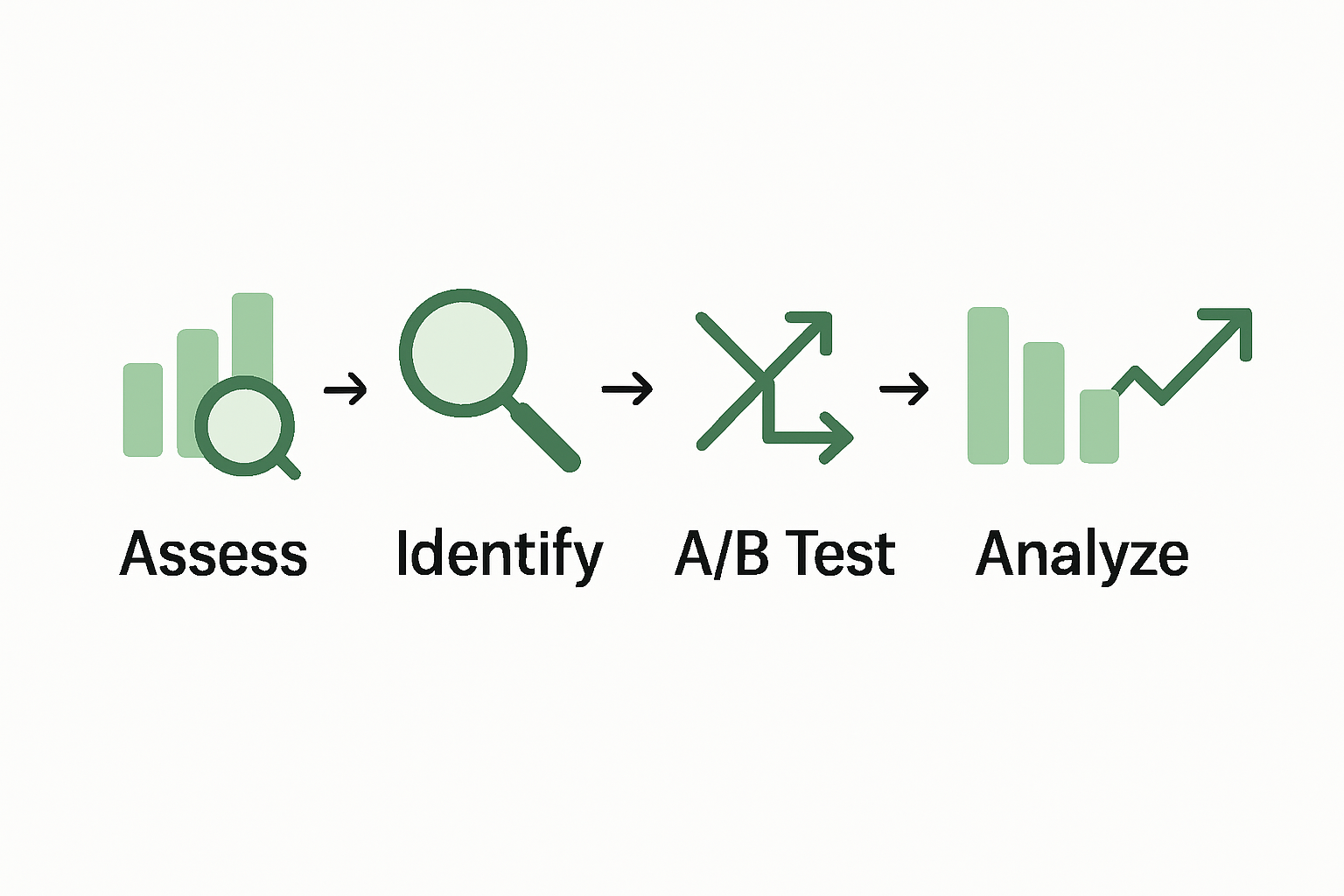
- Step 1: Assess Current Funnel Performance
- Step 2: Identify High-Impact Optimization Opportunities
- Step 3: Deploy AI-Powered A/B Tests Effortlessly
- Step 4: Analyze Results and Validate Improvements
- Step 5: Implement Proven Variations for Lasting Growth
Quick Summary
| Key Insight | Explanation |
|---|---|
| 1. Assess Funnel Performance | Analyze each stage’s conversion rates to identify drop-off points and improve user experience. |
| 2. Identify Optimization Opportunities | Use data analysis to prioritize impactful changes that enhance user decision-making in the funnel. |
| 3. Employ AI-Powered A/B Tests | Leverage AI tools for efficient testing of website elements to maximize conversion rate improvements. |
| 4. Analyze A/B Test Results | Evaluate comprehensive performance metrics to validate improvements and understand customer behavior more deeply. |
| 5. Implement Proven Variations | Translate data-driven insights into tangible website changes that promote incremental growth and optimize performance. |
Step 1: Assess Current Funnel Performance
Understanding your Shopify store’s conversion funnel performance is the critical first step in optimization. By systematically analyzing how potential customers move through your sales process, you can identify precise bottlenecks and opportunities for improvement.
To begin assessing your funnel, start by gathering comprehensive performance data across each stage. Research indicates that examining conversion rates between site visit, product view, cart addition, checkout initiation, and final purchase provides crucial insights into user behavior. Track the percentage of visitors who progress through each stage and calculate the drop-off rates. A typical e-commerce funnel reveals where potential customers lose interest or encounter friction.
Use Shopify’s built-in analytics or third-party tracking tools to collect precise metrics. Look for specific patterns such as which product pages have higher exit rates, where cart abandonment happens most frequently, and what devices or traffic sources convert most effectively. Most successful stores aim to understand not just overall conversion rates but the granular details of user interactions. By breaking down your funnel into measurable segments, you can create targeted strategies to improve customer experience and increase sales.
Step 2: Identify High-Impact Optimization Opportunities
Identifying the most impactful areas for conversion funnel optimization requires a strategic approach that combines data analysis and targeted testing. By pinpointing specific elements that significantly influence user behavior, you can prioritize improvements that deliver maximum results.
Advanced predictive modeling techniques from marketing research reveal that machine learning algorithms can effectively highlight optimization opportunities across different stages of your conversion funnel. These techniques help you understand which specific elements most strongly impact user decision making. Pay close attention to aspects like page layout, product descriptions, checkout process complexity, and visual design elements. Some stores discover that seemingly minor changes can produce substantial conversion rate improvements.
Carefully analyze your funnel metrics to distinguish between surface-level issues and deep-rooted conversion barriers. Research suggests balancing visual intensity and user experience to maximize conversion potential, which means avoiding overwhelming design elements while maintaining an engaging interface. Focus on creating clear pathways that guide customers smoothly from initial interest to final purchase. Successful optimization requires continuous experimentation and a willingness to make data-driven adjustments to your Shopify store’s design and functionality.
Step 3: Deploy AI-Powered A/B Tests Effortlessly
Deploying AI-powered A/B tests represents a transformative approach to conversion optimization for your Shopify store. This step allows you to systematically test and improve your website elements with minimal technical effort and maximum precision.

Advanced Bayesian learning algorithms now enable large-scale conversion funnel optimization through intelligent sequential testing, dramatically reducing the complexity of traditional A/B testing methods. By leveraging AI-driven tools, you can automatically generate and implement multiple test variations across critical website elements like product descriptions, images, pricing displays, and checkout processes. These sophisticated algorithms analyze user interactions in real time, identifying statistically significant improvements without requiring extensive manual intervention.
Research demonstrates that AI-driven methodologies can effectively mitigate risks while enhancing conversion rates through automated product page optimization. Focus on creating multiple test variations that explore different design approaches, messaging strategies, and user experience elements. Remember that successful A/B testing is an iterative process requiring continuous monitoring and refinement. Start with small, meaningful changes and progressively implement more comprehensive optimizations as you gather concrete performance data.
Step 4: Analyze Results and Validate Improvements
Analyzing A/B test results is a critical step in transforming data into actionable insights for your Shopify store’s conversion optimization strategy. This phase determines whether your implemented changes genuinely improve performance or require further refinement.
Advanced multi-task learning algorithms now enable more sophisticated analysis of marketing funnel decision making, allowing store owners to dig deeper into test outcomes beyond surface-level metrics. Focus on comprehensive performance indicators that go beyond simple conversion rates. Examine metrics like average order value, customer engagement duration, bounce rates, and multi-channel interaction patterns. Statistical significance is key when validating improvements. Ensure your test runs long enough to collect meaningful data and use robust statistical methods to confirm that observed changes are not random fluctuations.
E-commerce tracking tools provide critical insights into user behavior across multiple conversion channels, helping you understand the complete customer journey. Pay special attention to how different traffic sources and user segments respond to your variations. Not all improvements will impact every customer group equally. Be prepared to segment your results and develop targeted strategies that optimize experiences for specific audience demographics. Successful optimization is an ongoing process of continuous learning and incremental refinement.
Step 5: Implement Proven Variations for Lasting Growth
Implementing proven variations requires strategic thinking and a systematic approach to translating your A/B test insights into tangible website improvements. This critical stage transforms data driven discoveries into concrete changes that can significantly boost your Shopify store’s performance.
E-commerce brands employing comprehensive full-funnel marketing strategies have documented remarkable conversion rate increases of up to 38 percent, highlighting the potential of methodical optimization. Start by prioritizing variations that demonstrate statistically significant improvements across multiple key performance indicators. Look beyond simple conversion rate increases and consider metrics like average order value, customer lifetime value, and retention rates. Carefully document each implemented change and its expected impact to create a clear optimization roadmap.
Data-driven decision making tools and analytical dashboards play a crucial role in implementing and tracking proven variations, enabling store owners to continuously refine their approach. Develop a consistent review cycle where you monitor the long-term effects of your implemented changes. Remember that optimization is an ongoing process. What works today might require adjustment tomorrow, so maintain flexibility and a commitment to continuous improvement.
Boost Your Shopify Conversion Funnel with AI-Powered Testing
Optimizing your Shopify store’s conversion funnel is essential to overcome drop-offs and boost sales. The pain points highlighted in the article—from identifying bottlenecks and testing variations to validating improvements—are exactly the challenges that demand quick and effective solutions. With so many steps involved, from analysis to deployment, it can feel overwhelming and technical. That is where Automagic.li shines by removing complexity with AI-driven A/B testing designed specifically for Shopify users.
Automagic.li offers:
- A library of over 40 pre-tested, high-impact variations sorted by impact and certainty
- Automated code adjustments tailored to your store’s design without needing developers
- Effortless deployment of multiple AI-powered tests to rapidly validate winning improvements
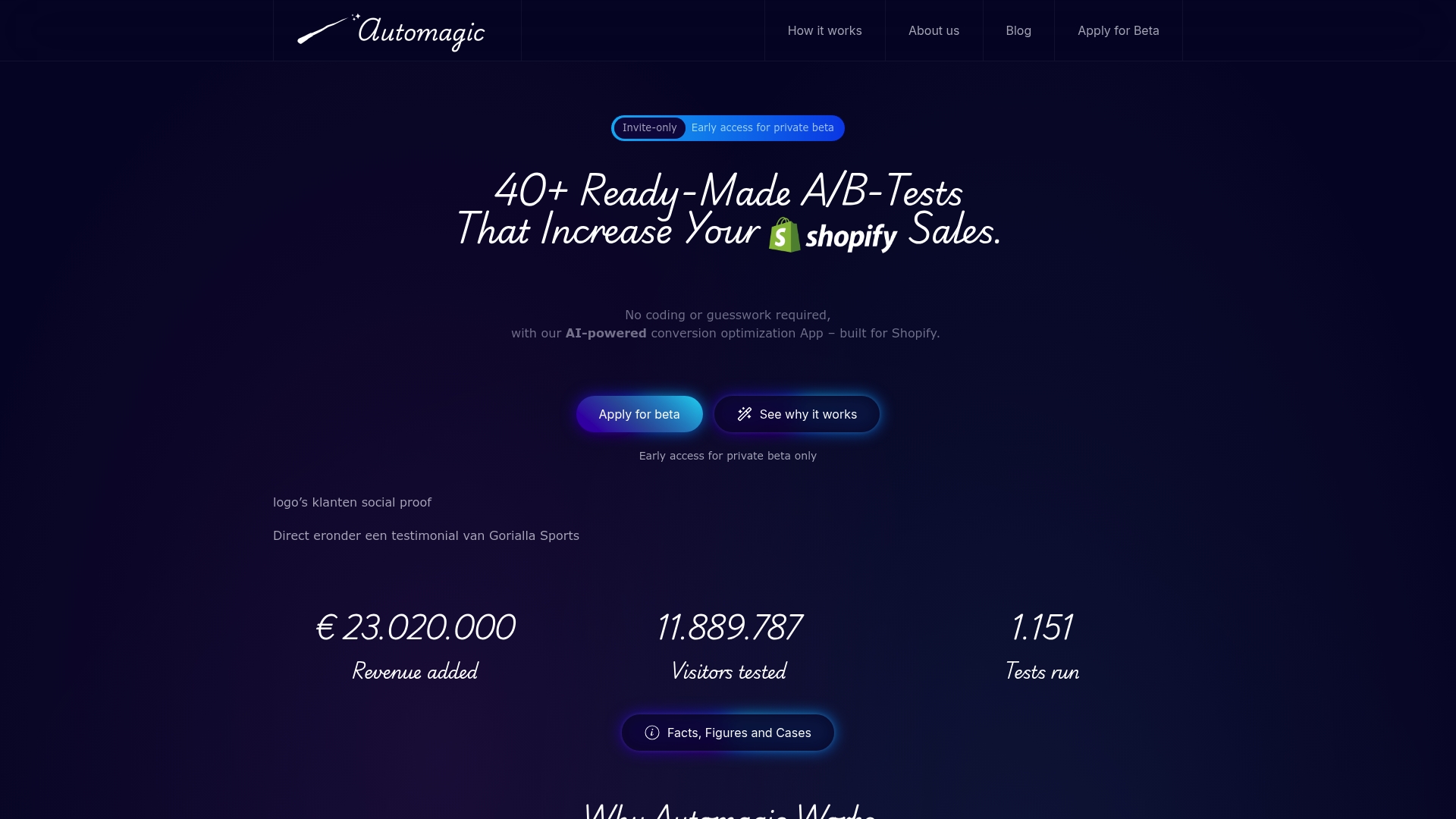
Ready to turn your Shopify conversion funnel insights into results without the hassle or wait? Visit Automagic.li to explore how our AI-powered SaaS platform can transform your optimization process. Take control today and start maximizing your store’s performance with expert-backed A/B tests made easy. Discover the power of data-driven decisions and watch your eCommerce growth accelerate now.
Frequently Asked Questions
How can I assess the performance of my Shopify conversion funnel?
To assess the performance of your Shopify conversion funnel, gather data on user interactions at each stage, including visits, product views, add-to-cart actions, and checkouts. Analyze these metrics to identify where visitors drop off, and focus on the areas with the highest abandonment rates to improve overall conversion rates.
What tools can I use to identify optimization opportunities in my conversion funnel?
Utilize Shopify’s built-in analytics or third-party tracking tools to gather insightful performance data. Look for metrics indicating user behavior that highlight areas requiring attention, such as page layouts or checkout processes that could be streamlined for better user experience.
How do I create effective A/B tests for my Shopify store?
Begin by developing multiple test variations of key site elements, such as product images or pricing displays. Ensure you implement these changes systematically and monitor them over time to identify statistically significant improvements that will enhance your overall conversion rates.
What metrics should I analyze after running A/B tests?
After running A/B tests, analyze metrics like average order value, bounce rates, and customer engagement duration, not just overall conversion rates. Ensure that your test results are statistically significant and assess how different segments of your audience respond to your changes.
How can I implement proven variations to ensure lasting growth?
To implement proven variations effectively, prioritize changes that have shown substantial improvements in A/B testing across multiple key performance indicators. Document each change and its expected impact to track its performance and ensure continuous improvement in your conversion rates.