
Step-by-Step Guide to A/B Testing Shopify for Growth
Over 50 percent of American Shopify merchants say that small tweaks have delivered major sales boosts. Optimizing your online store is not just for massive brands. Every improvement matters in a crowded e-commerce marketplace. Whether you want sharper conversion rates or deeper customer engagement, practical A/B testing gives you a proven path forward. This easy-to-follow guide will help you prepare, choose, and deploy the right tests so your results mean real growth.
Table of Contents
- Step 1: Prepare Your Shopify Store for A/B Testing
- Step 2: Select High-Impact A/B Tests from the Library
- Step 3: Deploy AI-Powered A/B Tests Effortlessly
- Step 4: Monitor Performance and Analyze Results
- Step 5: Implement Winning Variations for Optimization
Quick Summary
| Key Insight | Explanation |
|---|---|
| 1. Establish Baseline Metrics | Conduct a detailed analytics review to identify conversion rates, average order value, and bounce rates for accurate A/B testing. |
| 2. Prioritize High-Impact Tests | Select A/B tests focusing on critical conversion areas like product pages and checkout flows for maximum optimization potential. |
| 3. Utilize AI-Driven Tools | Employ AI-powered A/B testing platforms to refine test parameters and analyze results with greater speed and accuracy. |
| 4. Monitor Test Insights Closely | Consistently analyze A/B test results and avoid drawing conclusions until achieving statistical significance. |
| 5. Implement Winning Variations | Systematically apply successful test variants, ensuring they align with your overall store strategy and monitor their performance. |
Step 1: Prepare Your Shopify Store for A/B Testing
Preparing your Shopify store for A/B testing requires strategic planning and data-driven preparation. This initial step sets the foundation for meaningful optimization by ensuring your store is primed for accurate and insightful experiments.
To effectively prepare your store, start by conducting a comprehensive analytics review. Integrate conversion tracking to establish baseline performance metrics. Identify key performance indicators such as conversion rate, average order value, and bounce rate that you want to improve. These metrics will serve as your reference points for measuring the impact of future A/B tests.
Careful preparation also involves selecting the right elements to test. Focus on high-impact areas like product pages, checkout processes, and call-to-action buttons. Creating a strategic testing roadmap allows you to systematically experiment with design variations, helping you understand precisely what drives customer behavior. By approaching A/B testing with a structured methodology, you transform guesswork into a precise, data-driven optimization strategy.
Pro Tip: Always collect sufficient data before drawing conclusions. A small sample size can lead to misleading results that might negatively impact your store’s performance.
Step 2: Select High-Impact A/B Tests from the Library
Selecting the most effective A/B tests for your Shopify store can dramatically accelerate your conversion optimization strategy. This step involves strategically choosing tests that promise the highest potential return on your optimization efforts.

Navigate through the library of ready-made A/B tests by evaluating each test variation based on impact and statistical certainty. E-commerce testing strategies emphasize focusing on high-traffic pages and critical conversion points like product pages, checkout flows, and call-to-action elements. Look for tests with proven track records showing significant improvements in metrics such as conversion rates, average order value, and customer engagement.
When selecting tests, prioritize variations that align closely with your specific store goals and target audience. Some library tests might have been successful for other Shopify stores but may not perfectly match your unique customer demographics or product offerings. Carefully review the detailed test descriptions, previous performance data, and recommended implementation strategies to ensure the highest probability of success.
Pro Tip: Start with tests that have the highest confidence levels and most consistent historical performance across different store types to minimize risk and maximize potential gains.
Step 3: Deploy AI-Powered A/B Tests Effortlessly
Deploying AI-powered A/B tests transforms your Shopify store optimization from guesswork to precision. This step empowers you to implement sophisticated testing strategies without requiring advanced technical expertise.
Leverage advanced validation techniques to ensure your A/B tests deliver statistically significant insights. The latest research demonstrates how scalable Bayesian decision frameworks can dramatically accelerate online experiment optimization. AI-driven tools now make it possible to automatically adjust test parameters, analyze complex multivariate scenarios, and generate actionable recommendations with unprecedented speed and accuracy.
The deployment process involves selecting your chosen test variation, setting your targeting parameters, and allowing the AI system to manage sample distribution and statistical significance tracking. Modern A/B testing platforms can intelligently allocate traffic, minimize experiment duration, and provide real-time performance insights that help you make data-driven decisions quickly and confidently.
Pro Tip: Always monitor your tests closely during the initial stages and be prepared to pause or adjust if unexpected performance variations emerge.
Step 4: Monitor Performance and Analyze Results
Monitoring and analyzing A/B test results is a critical phase that transforms raw data into actionable insights for your Shopify store optimization. This step requires a strategic approach to interpreting test outcomes and making informed decisions.
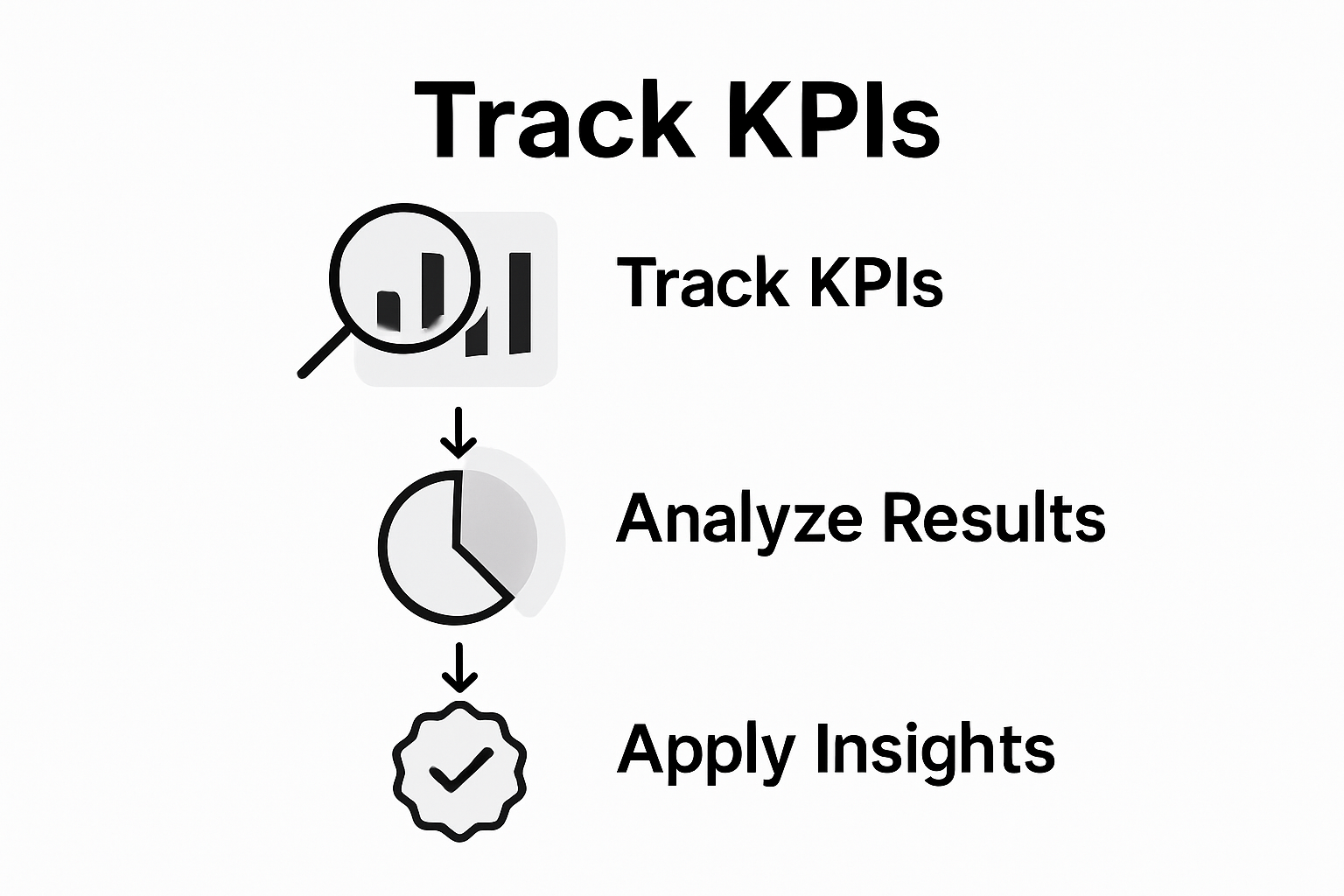
Understand the profit-maximizing methodologies that help balance opportunity costs and potential gains during test analysis. Advanced experimentation systems recommend tracking key performance indicators such as conversion rates, average order value, and statistical significance. Pay close attention to the confidence intervals and sample sizes to ensure your results are truly representative and not skewed by random variations.
Dig deeper into the performance metrics by segmenting results across different customer demographics, device types, and traffic sources. Look for nuanced insights that reveal not just overall performance but specific areas where test variations excel or underperform. The goal is to understand the underlying customer behavior patterns that drive your test results and translate those findings into concrete optimization strategies.
Pro Tip: Avoid making hasty decisions based on preliminary data. Wait until your test reaches statistical significance and maintains consistent performance across multiple observation periods.
Step 5: Implement Winning Variations for Optimization
Transitioning from A/B testing insights to actual store improvements requires strategic implementation of your most successful variations. This crucial step transforms data-driven discoveries into tangible performance enhancements for your Shopify store.
E-commerce A/B testing best practices emphasize a systematic approach to implementing winning test variations. Begin by prioritizing changes with the most significant impact on key performance metrics like conversion rates, average order value, and customer engagement. Carefully document each variation you plan to implement, ensuring that the changes align seamlessly with your overall store design and brand identity.
Roll out winning variations incrementally, monitoring their performance in real-world conditions. Successful implementation strategies recommend tracking the long-term impact of each change and being prepared to make additional refinements. Pay close attention to how different customer segments respond to the new variations, and be ready to make nuanced adjustments that maximize overall store performance.
Pro Tip: Create a change log for each implemented variation, tracking specific metrics before and after implementation to maintain a clear record of your optimization journey.
Unlock High-Impact Shopify Growth with AI-Powered A/B Testing
Struggling to confidently choose and deploy winning A/B tests on your Shopify store The step-by-step guide highlights challenges such as selecting high-impact tests, handling complex deployment without developer help, and analyzing results to maximize conversions. If managing multiple test variables and extracting clear insights feels overwhelming Automagic.li is designed to solve these exact pain points with its AI-driven platform. You gain instant access to a library of over 40 pre-tested high-certainty test variations tailored for Shopify stores. Automagic.li removes coding barriers by automatically adjusting your site’s code for each test so you can launch changes quickly and confidently without technical expertise. This streamlines preparation and monitoring steps, empowering you to achieve sustained sales growth.
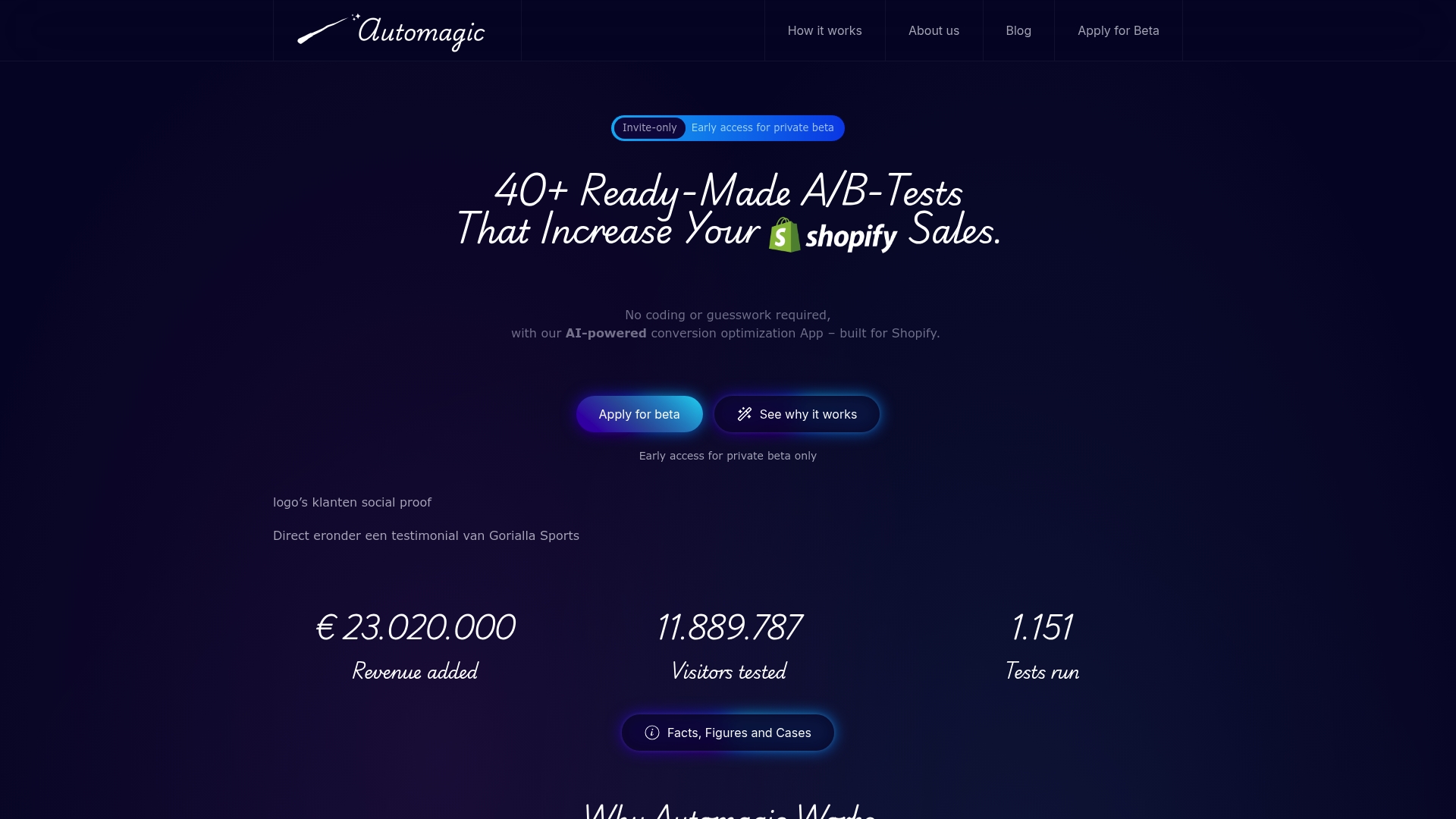
Ready to move beyond guesswork and unlock your store’s true potential Start optimizing with Automagic.li today. Explore how you can seamlessly select and deploy winning tests and access powerful conversion insights by visiting the main landing page. Don’t wait to turn data into measurable growth—your Shopify store deserves AI-powered optimization that delivers results.
Frequently Asked Questions
How can I prepare my Shopify store for A/B testing?
To prepare your Shopify store for A/B testing, start by conducting a comprehensive analytics review to establish baseline performance metrics. Identify key performance indicators like conversion rate, average order value, and bounce rate, and select high-impact areas to test, such as product pages and checkout processes.
What types of elements should I A/B test in my Shopify store?
Focus on high-impact elements that can directly influence customer behavior. Test variations on product pages, checkout processes, and call-to-action buttons to understand which changes lead to improved conversion rates and engagement.
How do I select the best A/B tests for my Shopify store?
Choose A/B tests that align closely with your store’s goals and audience. Evaluate available tests based on their historical performance and impact on conversion rates to maximize your optimization efforts.
How can I monitor the performance and analyze the results of my A/B tests?
Monitor your A/B test results by tracking key performance indicators like conversion rates and average order value. Analyze results by segmenting data according to customer demographics and traffic sources to uncover deeper insights that inform your optimization strategies.
What should I do after finding a successful A/B test variation?
Once you identify a successful A/B test variation, implement it systematically into your Shopify store. Track the long-term impact of the change on your key metrics and be prepared to make additional refinements based on customer responses.